

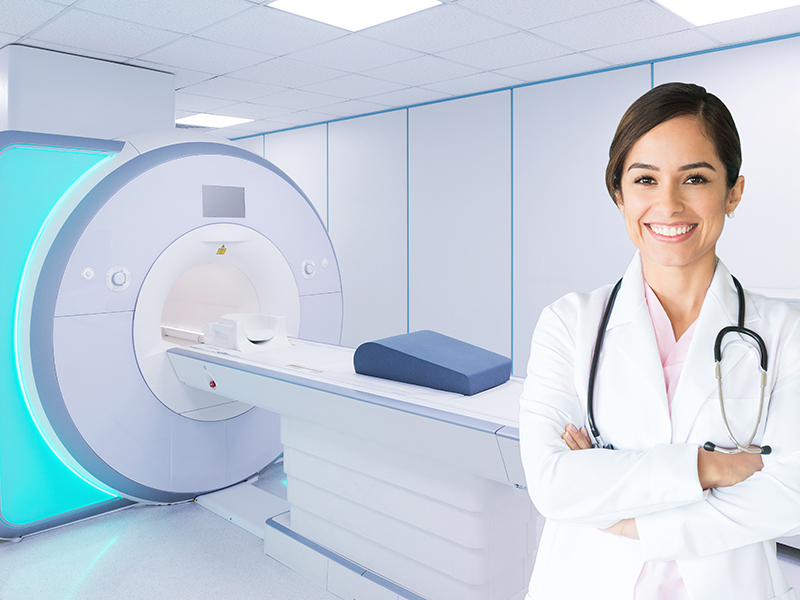
A CT scan (computed tomography scan) is an advanced imaging modality which uses a focused beam of X-rays to create detailed cross-sectional images (or slices) of the body. It allows the healthcare providers to clearly visualise and analyse internal organs, bones, soft tissue, and blood vessels. The details provided by the scan are much more detailed as compared to the traditional X-rays. This scan is one of the fastest ways to view the abdomen, chest and pelvis area as it captures multiple layers of tissues at once.
How does a CT scan work?
A CT scanner is a large cylindrical machine with a hole, or short tunnel at the centre. During the CT Scan, the patient may need to lie on a motorised bed that slowly moves through the gantry. Inside, the X-ray tube rotates around the patient emitting narrow beams of X-rays through the body. Instead of film, the scanner uses special digital x-ray detectors placed opposite the X-ray source to capture the data. This data is then processed by a computer, which helps create a detailed 3-D cross-sectional model of the internal structures of the body. In some cases, a contrast dye may also be administered orally or through an injection to enhance visualisation of specific organs or blood vessels.
Depending on the scanner’s settings, the thickness of each image slice can vary from 1-10 millimeters. The scanning process continues till the desired number of slices is collected. These images can be displayed individually or stacked together to create a complete image of the patient. Because of its rotating mechanism, this imaging modality makes it easy to locate the exact place of the problem and pinpoint the exact location and nature of abnormalities.
If you live in Delhi-NCR, do an online search to know “CT scan price” in your vicinity.
Preparation before the scan
Upon arrival at the diagnostic centre or hospital, you will be asked to wear a lose-fitting gown. Metallic objects such as jewelry, eyeglasses, dentures and hairpins may affect the CT images and should be left at home or removed prior to your exam. You may also be asked to remove hearing aids and removable dental work.
In some cases, you may be asked to avoid eating or drinking for several hours before the scan. It is important to inform the radiologist about any medications you are currently taking or have any allergy. In addition, also inform the radiologist of any recent illnesses or other medical conditions, and if you have a history of heart disease, asthma, diabetes, or kidney disease.
The radiologist must also be informed about if a patient is suffering from asthma, multiple myeloma or any disorder of the heart, kidneys thyroid gland, or diabetes. Women must inform the radiologist if they are pregnant or suspect pregnancy before the scan.
Common uses of a CT scan
A CT scan is a safe, non-invasive and quick procedure. Here are some common uses of a CT scan:
Detect early signs of stroke, blood clots, or brain hemorrhage
Identify head injuries, fractures or internal bleeding
Spot tumours, measure their size, and assess spread
Diagnose cancers of the lung, liver, pancreas, and other organs
Check for skull deformities or bone diseases
Evaluate inflammation or infections in organs and soft tissues
Guide biopsies and other image-guided procedures
Plan radiation therapy or surgical treatment
Determine the extent of internal injuries and internal bleeding
Examine the blood vessels and other internal structures
Disclaimer: For personalised advice and further information, always consult your doctor or qualified healthcare professional.

 Healing Hub Health Blog